

How to Choose the Right Commercial Refrigerator for Your Business

A Complete Buying Guide for Restaurants, Cafés, and Food Service Businesses
Choosing the right commercial refrigerator is one of the most important decisions for any food-related business. Whether you run a restaurant, café, bar, or catering service, your refrigeration system directly affects food quality, kitchen efficiency, and long-term operating costs.
However, many businesses make the mistake of selecting equipment based only on price or appearance, without considering real operational needs. This guide will help you understand the key factors to consider so you can make a confident and informed decision.
1. Start by Understanding Your Business Type
Different businesses have very different refrigeration requirements. Before choosing a model, you should clearly define how your business operates.
- Restaurants: Require frequent access, fast cooling recovery, and durable performance for busy kitchens.
- Cafés & Bakeries: Need stable temperature control for ingredients like milk, cream, dough, and desserts.
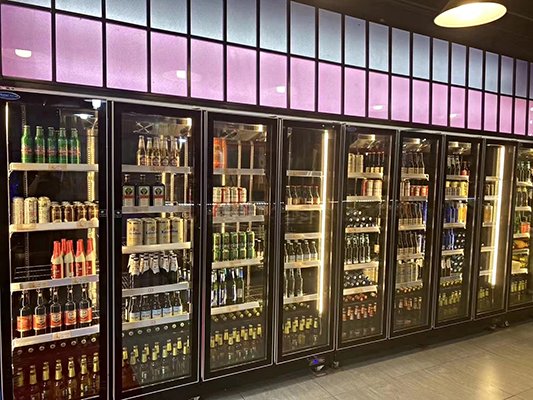
- Bars & Beverage Shops: Often prioritize glass door display refrigerators for visibility and customer appeal.
- Supermarkets & Convenience Stores: Require larger capacity and organized storage for multiple product categories.
- Catering Businesses: Need flexible storage that supports bulk preparation and transport.
Understanding your business type helps narrow down the right refrigeration category from the beginning.
2. Choose the Right Type of Commercial Refrigerator
Commercial refrigerators come in several main types, each designed for specific use cases:
Reach-In Refrigerators
These are the most common type used in commercial kitchens. They provide easy access to stored ingredients and are ideal for daily restaurant operations.
Walk-In Coolers and Freezers
Designed for large-scale storage, walk-in units are suitable for businesses that handle bulk food inventory or require long-term storage.
Display Refrigerators
Featuring glass doors and lighting, these units are ideal for beverages, desserts, and retail environments where visibility is important.
Undercounter Refrigerators
Compact and space-saving, these units are perfect for small kitchens or as supplementary storage near preparation stations.
3. Determine the Right Size and Capacity
Size is one of the most critical factors when selecting a commercial refrigerator.
A unit that is too small can cause operational delays during peak hours, while an oversized unit increases energy consumption and unnecessary costs.
When evaluating size, consider:
- Available kitchen space
- Daily storage volume
- Peak-hour demand
- Frequency of restocking
A well-sized refrigerator ensures smooth kitchen workflow and cost efficiency.
4. Understand Temperature Requirements
Different food products require different storage temperatures:
- Refrigeration: 0°C to 5°C (32°F to 41°F) for general food storage
- Freezing: -18°C (0°F) or lower for long-term preservation
- Dual-temperature units: Offer both refrigeration and freezing compartments
For example, meat and seafood require more stable low temperatures, while beverages and prepared foods may require standard refrigeration.
Choosing the correct temperature range helps maintain food safety and product quality.
5. Pay Attention to Energy Efficiency
Energy consumption is a major operating cost for commercial kitchens in the United States.
An energy-efficient refrigerator can significantly reduce monthly electricity expenses over time.
Key features to look for include:
- High-efficiency compressors
- Thick insulation materials
- Tight door sealing systems
- LED interior lighting
- Intelligent temperature control systems
While energy-efficient models may have a slightly higher initial cost, they offer strong long-term savings.
6. Important Features You Should Not Overlook
Beyond basic cooling performance, modern commercial refrigerators offer several important features that improve usability and reliability:
- Digital temperature control panels
- Automatic defrost systems
- Door open alarms
- Adjustable shelving systems
- Stainless steel interiors for durability and hygiene
- Ventilation-friendly design for heat dissipation
These features help improve efficiency and reduce maintenance issues over time.
7. Common Mistakes When Choosing a Commercial Refrigerator
Many buyers encounter issues after purchase due to avoidable mistakes:
- Choosing equipment based only on price
- Ignoring ventilation and installation space requirements
- Selecting the wrong voltage or power configuration
- Not considering door type (solid vs. glass)
- Underestimating storage needs during peak operations
Avoiding these mistakes can save both time and long-term operational costs.
8. Why Professional Guidance Matters
Every business has unique operational needs, kitchen layouts, and workflow patterns. A standard solution may not always be the most efficient option.
That is why professional consultation is often essential when selecting commercial refrigeration equipment.
At Starcrest, we work closely with food service businesses to understand their requirements and provide tailored refrigeration solutions that balance performance, efficiency, and durability.
Need Help Choosing the Right Model?
If you would like assistance selecting the most suitable commercial refrigeration solution for your business, feel free to contact us. Our team can help you identify the right configuration based on your kitchen layout and operational needs.